
How Long Should Australian Businesses Keep Records Before Shredding Them?
In the fast-paced world of business, record-keeping is crucial. Australian businesses face strict record retention laws. Compliance is not just a legal obligation; it’s a necessity.
Understanding how long to keep records can be challenging. Different types of records have different retention periods. This guide will help clarify these requirements.
From financial to employee records, each has its own timeline. Knowing when to shred documents is equally important. It ensures both compliance and security.
Businesses must navigate federal and state laws. This article provides clear guidelines for Australian businesses. Stay informed and avoid potential penalties.
Implementing a solid record retention policy is key. It supports efficient document management and legal compliance. Let’s explore the essentials of record retention.
Understanding Record Retention Laws in Australia
Australian businesses must follow both federal and state laws for record retention. These laws help ensure that businesses maintain transparency and accountability in their operations. Compliance is crucial to avoid legal issues and penalties.
Federal guidelines include requirements from the Australian Taxation Office (ATO) and other regulatory bodies. Businesses must stay updated on these regulations to maintain compliance. Each state may have its specific requirements, making awareness essential.
Key federal retention periods include:
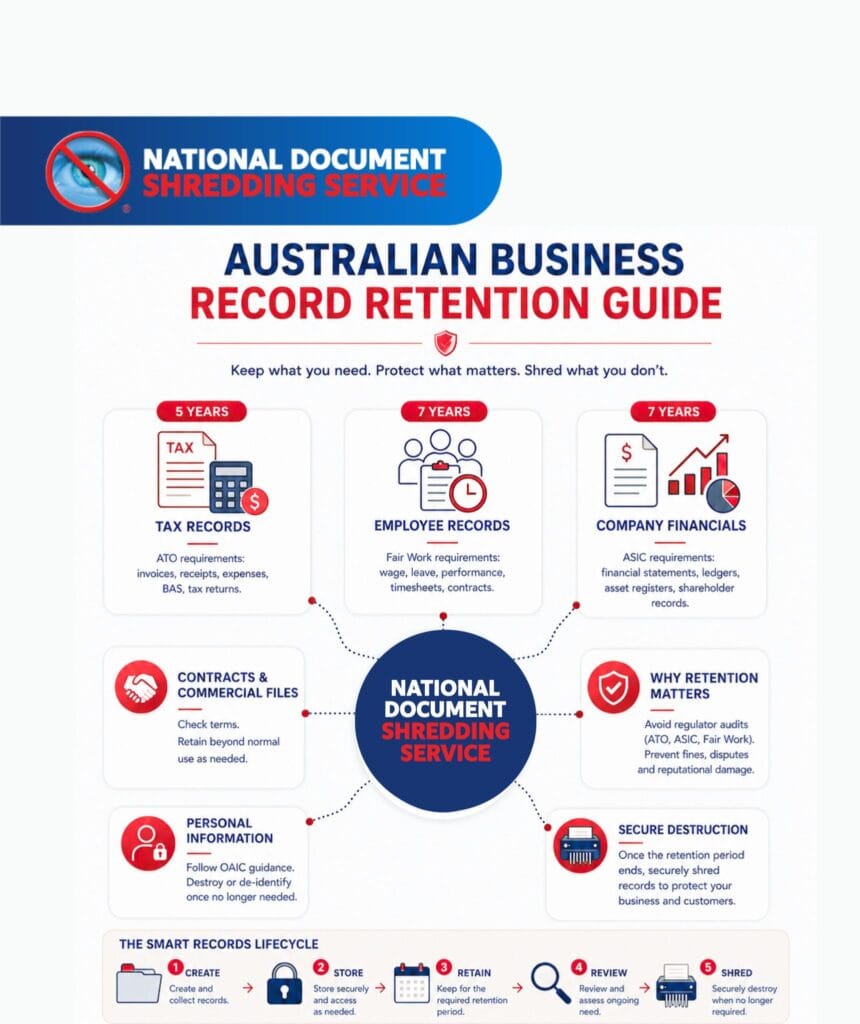
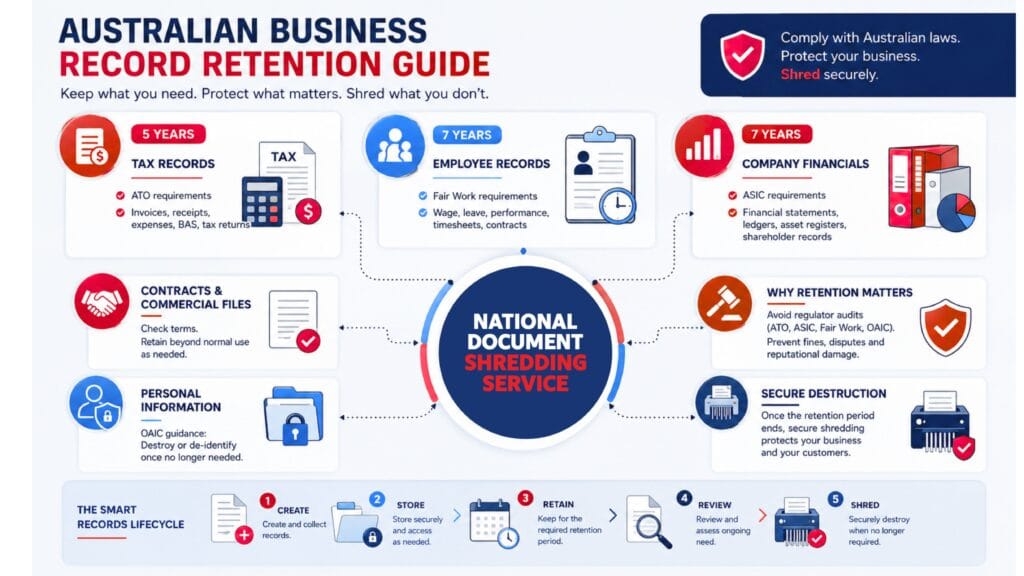
Financial records: 5 years minimum
Employee records: 7 years after employment ends
Superannuation contributions: 5 years
Industry-specific regulations can also impact retention periods. Some sectors may require longer retention due to unique legal obligations. Regular review of these guidelines ensures a business’s record-keeping practices remain compliant.
Key Record Retention Periods for Australian Businesses
Australian businesses must diligently track their records, following specific retention periods for different types. This ensures compliance and aids in effective management.
Financial Records
Financial documents are essential for tax purposes. The ATO requires businesses to retain these for at least five years. This includes everything from invoices to receipts. Keeping these records allows businesses to substantiate their tax returns.
Employee Records
Employees’ records hold pertinent information about their work history and agreements. Retain employee records for seven years after they leave the company. This helps address any future queries or disputes.
Legal Documents
Contracts and agreements are central to business operations. Retain these documents for seven years after expiration. Doing so can protect businesses in legal disputes or audits.
Superannuation Contributions
Superannuation is another key area. Businesses must keep contribution records for five years. Compliance in this area is crucial for both employers and employees.
Industry-Specific Records
Some sectors, such as environmental industries, have unique requirements. Businesses in these fields should consult industry-specific regulations for guidance.
General Operations
Records of company operations, like board meeting minutes, should be kept for at least seven years. These records provide a comprehensive history of business decisions and changes.
The Importance of Adhering to Guidelines
Adhering to these retention periods can safeguard your business. It reduces the risk of penalties and ensures readiness for audits. Implementing clear guidelines aids in efficient record keeping. This promotes organizational clarity and smooth business operations.
Special Considerations: Industry-Specific and Legal Requirements
Different industries face unique regulations that dictate record retention. Understanding these specific needs is crucial for compliance.
Industry Variances
Certain industries, like healthcare and finance, have stringent requirements. These sectors must adhere to more rigorous standards. For example, healthcare providers might need to retain patient records for a longer duration.
Legal Obligations
Businesses should be aware of any legal obligations that apply specifically to their operation. This includes keeping abreast of changes in legislation. Consulting legal experts ensures your practices align with current laws.
Considerations List
Healthcare: Patient records often have extended retention.
Finance: Transactions may need to be kept longer.
Environmental: Specific regulations affect industry retention periods.
Failure to comply with these requirements can lead to significant penalties, underscoring the importance of tailored retention policies.
Digital vs. Physical Records: Storage and Security
In today’s digital age, businesses manage both physical and digital records. Each type requires unique storage solutions and security measures.
Digital records must be stored securely to prevent unauthorized access. Regular backups are vital to protect against data loss. Meanwhile, physical records need safe storage environments to avoid damage from fire or water.
Businesses should adopt clear guidelines for managing both types of records. Incorporate these practices to enhance security and efficiency:
Regularly update security protocols for digital systems.
Use fireproof cabinets for important physical documents.
Implement access controls for record storage areas.
Creating a Record Retention Policy
A well-crafted record retention policy is essential for any business. It helps ensure compliance and organizes record-keeping tasks efficiently.
Start by identifying the types of records your business generates. Recognize the legal and regulatory requirements for each document category. Consult industry guidelines to ensure accuracy.
Outline clear retention periods tailored to your operations. This prevents retaining documents longer than necessary. Consider these elements when crafting your policy:
Define categories for different types of records.
Set specific retention timelines for each category.
Detail procedures for secure document destruction.
Regularly review and update your policy to adapt to new laws and business needs. Keeping it current enhances your compliance and organizational efficiency.
When and How to Shred Business Records
Timing is key when shredding business records. Shred documents once they surpass their designated retention period. This minimizes storage costs and reduces legal risks.
Confidential records demand a secure shredding process. Implement secure methods to protect sensitive information. This prevents data breaches and complies with privacy laws.
Consider using professional shredding services for added security. Ensure they provide a certificate of destruction. Prioritize the following steps when shredding:
-
Review records due for shredding.
-
Ensure documents are no longer legally needed.
-
Use cross-cut shredders for added security.
- * Implement these practices to maintain compliance and safeguard your business interests
Best Practices for Business Record Keeping and Compliance
Effective record keeping is crucial for smooth operations. It ensures compliance and aids in business management. Regular audits of record-keeping practices can enhance accuracy.
Establish clear guidelines for handling various records. Different types require distinct retention strategies. Tailoring policies to your industry ensures adherence to specific regulations.
Training employees is vital for maintaining consistency in record keeping. Make sure everyone understands the procedures. Well-informed staff are essential to compliance.
Consider these best practices:
Implement a document management system.
Regularly update retention policies to reflect legal changes.
Use secure methods for storing sensitive records.
Following these practices can streamline operations and reduce legal risks for your business.
Frequently Asked Questions
How often should businesses update their record retention policies? Policies should be reviewed annually or when laws change. This keeps practices compliant and up-to-date.
What should be done if records are lost or damaged? Create a backup strategy to safeguard records. This prevents data loss and ensures continuity.
Is digital storage more secure than physical? Both have their merits. Digital storage allows for easy access, but security systems must be robust.
Proper record retention is essential for Australian businesses to maintain compliance and efficiency. Understanding the specific requirements for different types of records helps in organizing and managing documentation effectively.
By adhering to legal guidelines and implementing a robust record retention policy, businesses can reduce risks and enhance operational transparency. Regular audits and training ensure ongoing adherence to best practices, safeguarding both the business and its stakeholders.